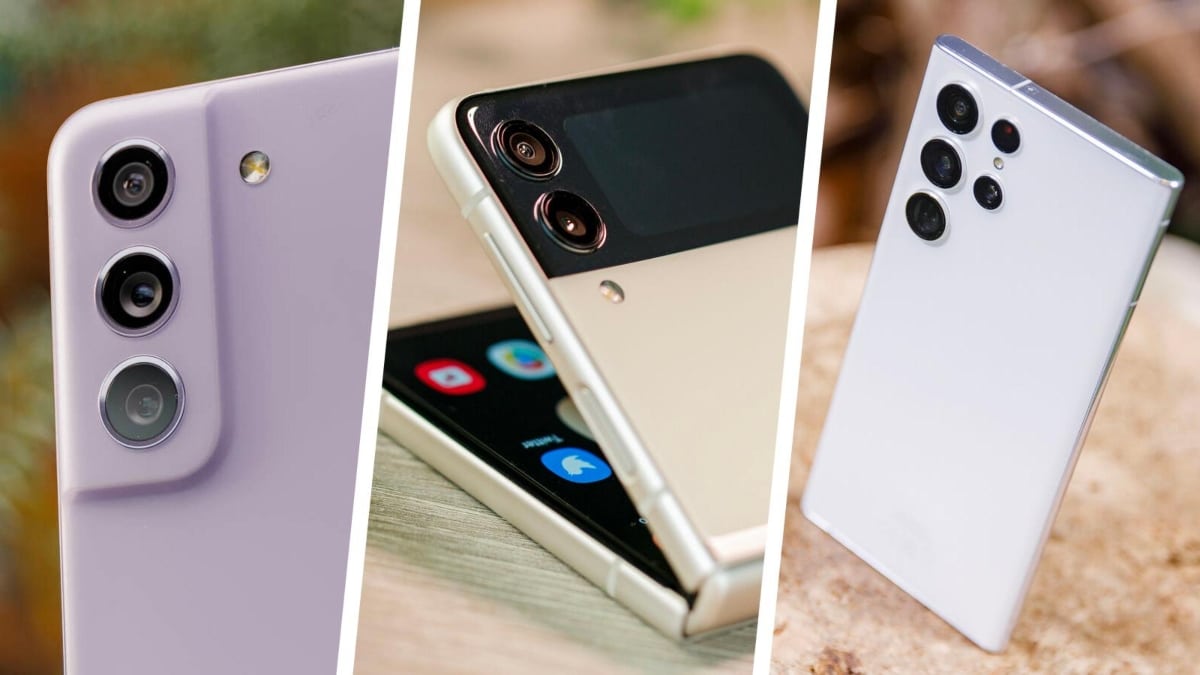
Does it make sense to spend 700 or 800 euros on a high-end smartphone? They're the best phones in the smartphone world, and when you're looking for quality, it's easy to end up with a flagship model. However, flagship phones still lack something that's no longer acceptable: at least 128 GB of internal storage . The price we pay for premium devices should include a seamless experience, and storage is a key component of real-world, day-to-day performance.
32 GB is the minimum for a mobile to be good
What should the internal memory of a high-end mobile phone be? It's a complex question, as it depends on the type of user and how they use the phone. For a long time, it was argued that 32 GB was the minimum capacity for a phone to be usable. Below that, it's common to encounter storage problems after just a few weeks , even without installing many apps.
Therefore, launching a flagship phone with only 16GB of RAM is practically a rip-off. This was the case, for example, with very popular high-end models sold with 16GB despite their premium price. The discrepancy between price and base storage was, and continues to be, a source of criticism: if a manufacturer boasts about launching the best phones in the world, it can't fall short on such a basic component.
It's worth remembering that the operating system , custom interfaces, and pre-installed apps consume a significant portion of storage . On a 32GB phone, the actually available space can be considerably reduced. Add to that the size of current games, downloading music and TV shows for offline viewing, the file size of high-resolution and 4K photos and videos , and storing work documents: all of this pushes you to exceed that limit very quickly.
Furthermore, perceived performance also suffers when internal storage is nearly full. Maintaining sufficient free space improves write speed, system responsiveness, and reduces the risk of errors when updating applications or the system itself.
Is 32GB of storage acceptable? For extremely basic use, perhaps, but it's not consistent with the promise of a flagship phone. A premium mobile should offer ample storage for years , not just the first month.
32 GB is a capacity that has been in the high-end for years.
There were flagship phones from past generations that already included 32 GB of internal storage. In other words, it was long considered that a top-of-the-range phone should offer at least that amount. Meanwhile, flash memory drives have decreased in price while increasing in performance and density. Today, it's possible to find 128 GB external storage at very affordable prices, which reinforces the idea that the price differences between 64, 128, or 256 GB versions of mobile phones are not so much due to the cost of the component itself, but rather to product positioning.
Therefore, selling a premium phone with 16 or even 32 GB of storage shouldn't be considered "high-end." The flagship label demands excellence across the board, including storage, which affects the everyday user experience as much as the screen or the processor.
An important point: many users supplement the internal memory with microSD cards . This is a great help in compatible models, but it doesn't completely replace internal storage in terms of speed and reliability for critical applications. The internal storage should be sufficient on its own, and the microSD card should be an addition.
Intermediate conclusion: While 32 GB was considered the minimum for years, it falls short in practice today. The reasonable standard in high-end devices needs to be higher , because actual usage has changed drastically.
128GB should be the minimum memory
For a phone to truly be a flagship, it should have at least 128 GB of internal storage . We're not just talking about capacity: we're talking about the security of recording 4K video, the freedom to install large games, space for high-resolution photo libraries, and the ability to download content offline. A high-end user doesn't want to be managing their own storage every day.
Furthermore, advancements in processors and RAM have been enormous, and it makes no sense to keep storage at conservative levels. If raw performance is the hallmark of power, storage must keep pace , both in terms of capacity and speed (UFS internal versus microSD external).
However, the reality is that not all models offer 128GB of base storage. If your phone allows it, expanding with a 128GB microSD card can be a great addition for photos, videos, music, downloads, and backups. Choosing the right card is key to ensuring it doesn't negatively impact your experience.
What to look for in a 128GB microSD?
- Speed classesLook for UHS-I with U3 and V30 video class for stable 4K recording. If you only record photos or Full HD, U1/V10 may work, but for intensive use, U3/V30 is better.
- App performance: A2 performance class is designed to accelerate random read/write and improve usability with applications and games. This is key if you plan to move app data to the card.
- Actual speeds: There are models that reach approximately up to 170 MB/s read and 90 MB/s write, which speeds up transfers and reduces wait times when copying 4K videos.
- Compatibility and format: : check that your phone supports 128GB microSDXC and file systems like exFAT to handle large files (long videos).
- Durability: Shock, vibration and X-ray resistant cards, with a design for Adverse conditions (humidity or temperature) are ideal if you use your phone for adventures, drones or sports.
- Useful accessories: Many include an SD adapter for cameras, and allow move content between devices easily.
These specifications, common in cards from well-known brands, make a difference when working with 4K, camera bursts, or syncing large libraries. Even so, don't forget that internal memory is still faster and more reliable for critical apps: use the microSD card as a smart extension, not as a replacement for the main memory.
What if my flagship doesn't support microSD?
- Choose larger internal capacity from the start: you'll avoid paying later for services or accessories and you'll have room for years of use.
- USB OTG and portable SSD: For quick backups on the go or in the field, a USB-C portable SSD is a great solution.
- Cloud and optimization: combines automatic cloud backups with a good cache and download management so as not to fill the storage with temporary data.
Beyond storage capacity, it's worth considering how we store our content. If you record a lot of 4K/60fps video, camera RAW files, or play large games, 128GB becomes the minimum reasonable amount . Heavy multimedia and productivity users will appreciate 256GB or more, especially on models without a microSD card slot.
Finally, a note on pricing: the differences between storage variants don't usually reflect the actual cost of the component, but rather the pricing strategy. If you have the option, it's worth opting for the version with more memory from the start; it saves you time, trouble, and ultimately, money and frustration.
A flagship device needs at least 128GB of internal storage to live up to its promises. A 128GB microSD card is a valuable addition to compatible models, provided you choose U3/V30 and A2 class cards , good durability, and exFAT compatibility. This way, internal and external storage work together to deliver the premium experience that those who pay for top-of-the-line devices deserve.